How does NanoGenizer High Pressure Homogenizer work?

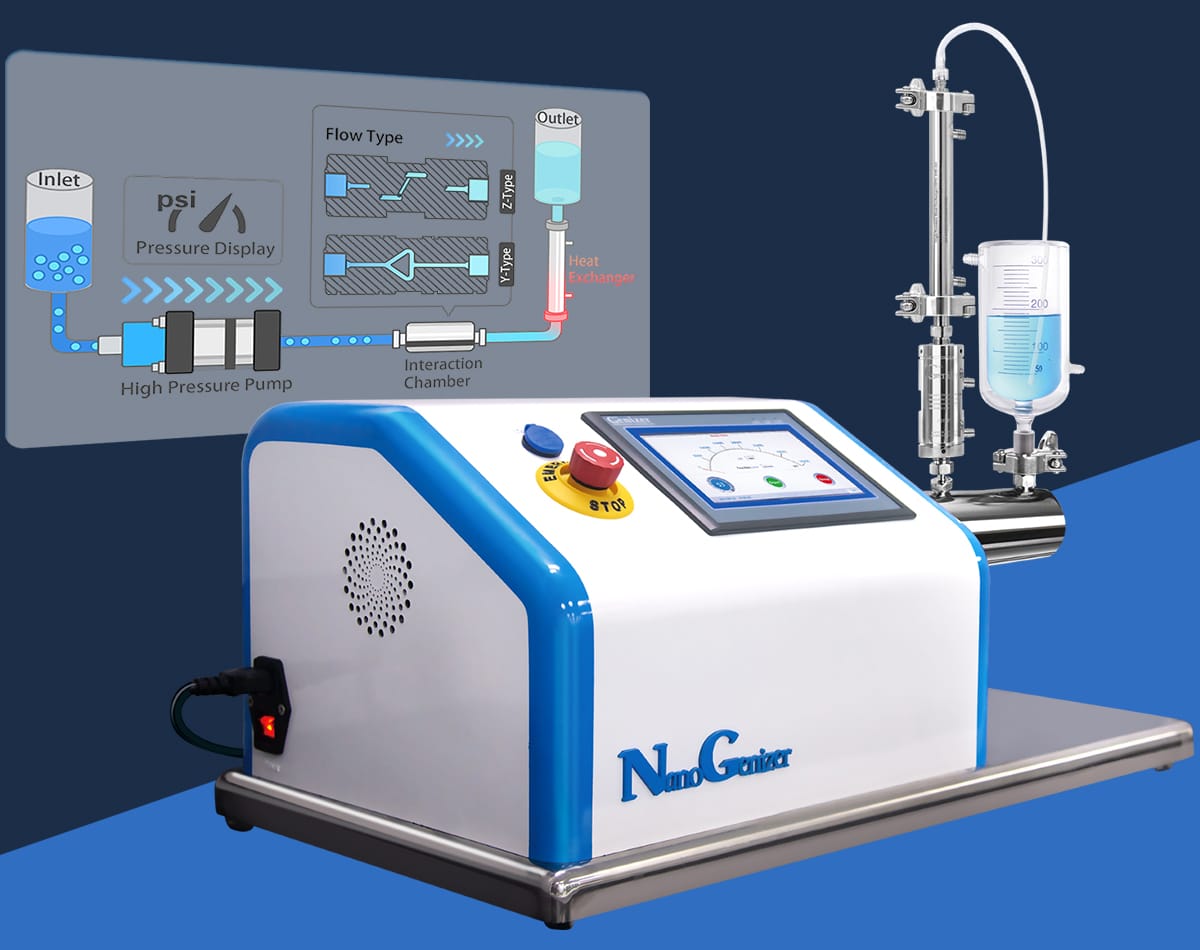
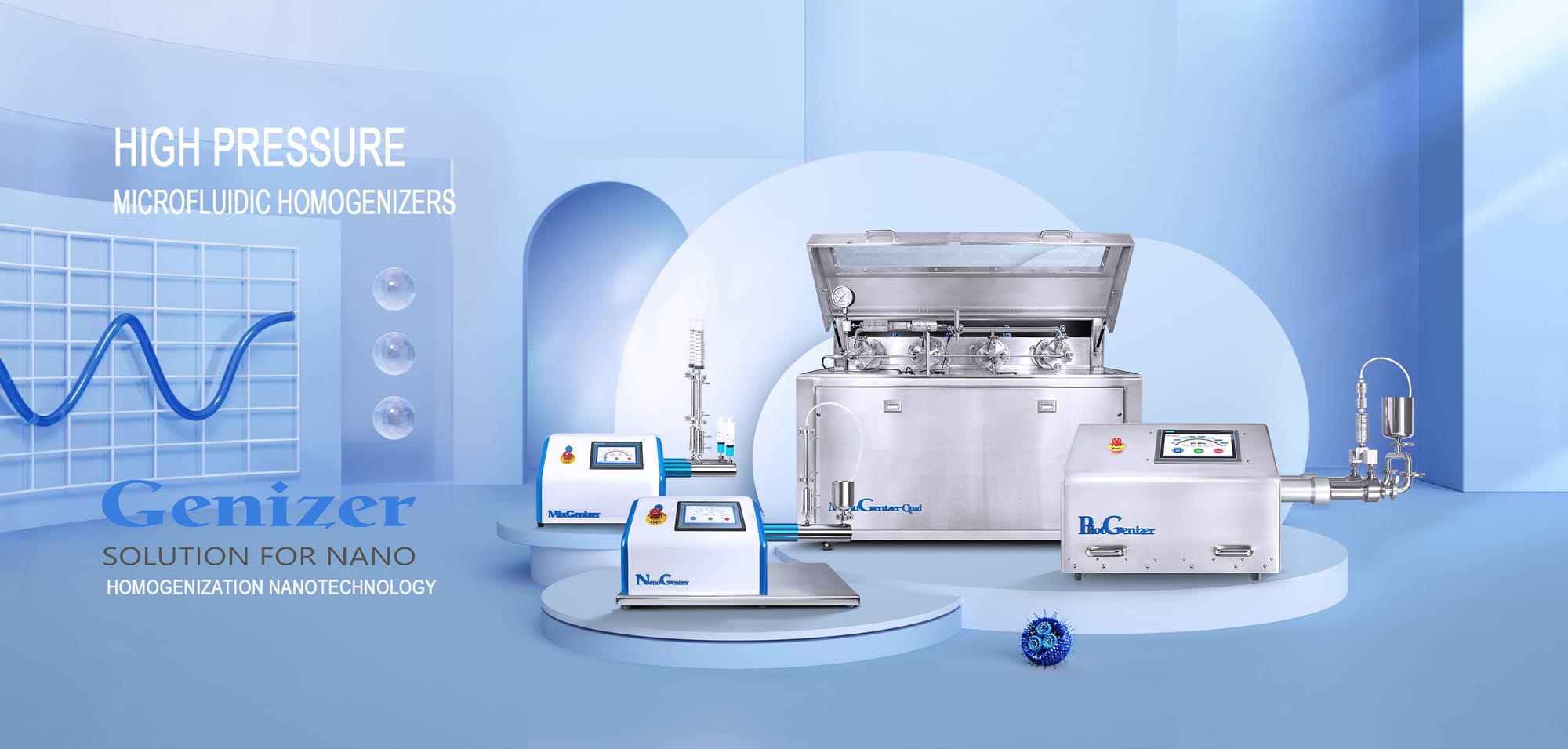
The NanoGenizer is a laboratory-scale high-pressure homogenizer designed for precise and efficient sample processing. It consists of two main components: the power unit and the core processing unit, where homogenization occurs.
Step 1: Sample Preparation
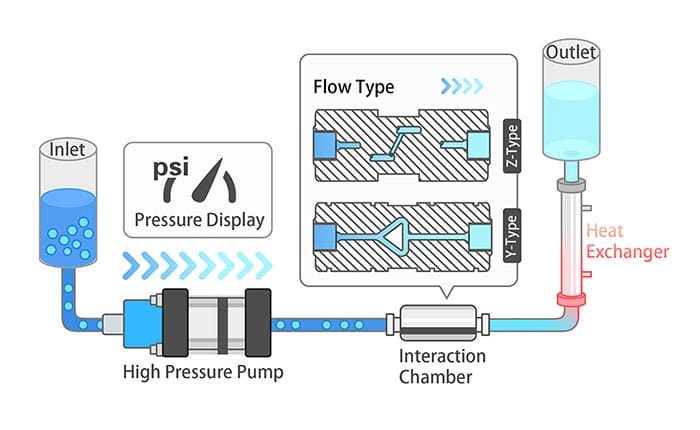
Before homogenization, the sample is placed in an inlet reservoir. Genizer offers options such as stainless steel, plastic syringes, or glass reservoirs, catering to different sample sizes and needs. Post-homogenization, the processed sample is collected in an outlet reservoir, with options like jacketed glass cylinders for temperature-controlled applications.
Step 2: High-Pressure Homogenization Process
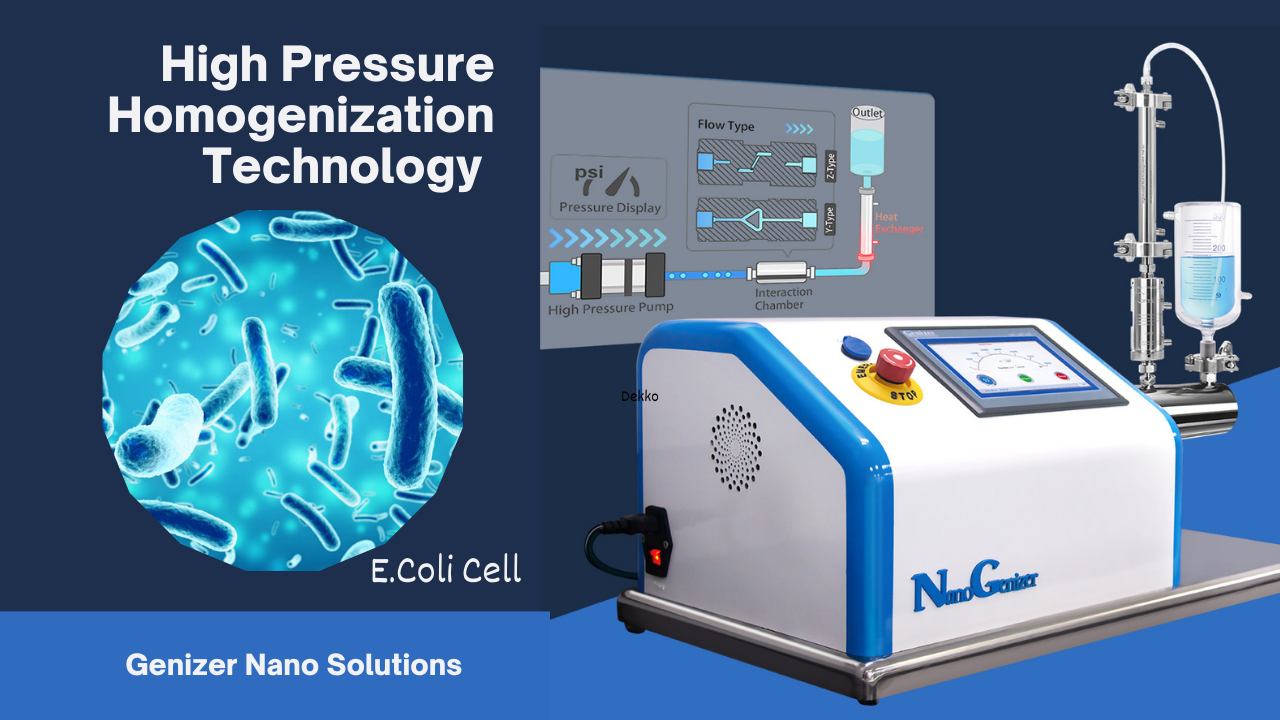
The sample flows through the inlet valve into the high-pressure cylinder, propelled into the Diamond Interaction Chamber (DIXC). The chamber features fixed-geometry micro-channels where forces like high shear and cavitation reduce particles to nano sizes. Depending on the chamber type—Y-shaped for liquid-liquid mixtures or Z-shaped for solid-liquid combinations—the sample undergoes optimal homogenization.
Step 3: Temperature Control
To maintain thermal stability, the NanoGenizer includes cooling options like a real-time heat exchanger, ideal for heat-sensitive samples.
Why Choose the NanoGenizer?
With low minimum volume, low dead volume, and advanced temperature control, the NanoGenizer is a top choice for achieving consistent, high-quality results in laboratory settings.
Related Articles
High Pressure Homogenizer Introduction
Using NanoGenizer High Pressure Homogenizers for Nanomaterials and Cell Disruption
Liposome Extruders: What it is, How it works, Advantages, Functions, Mechanisms, and Types