Cell Disruption by High Pressure Homogenization | High Efficiency Cell Lysis Technology

What is Cell Disruption?
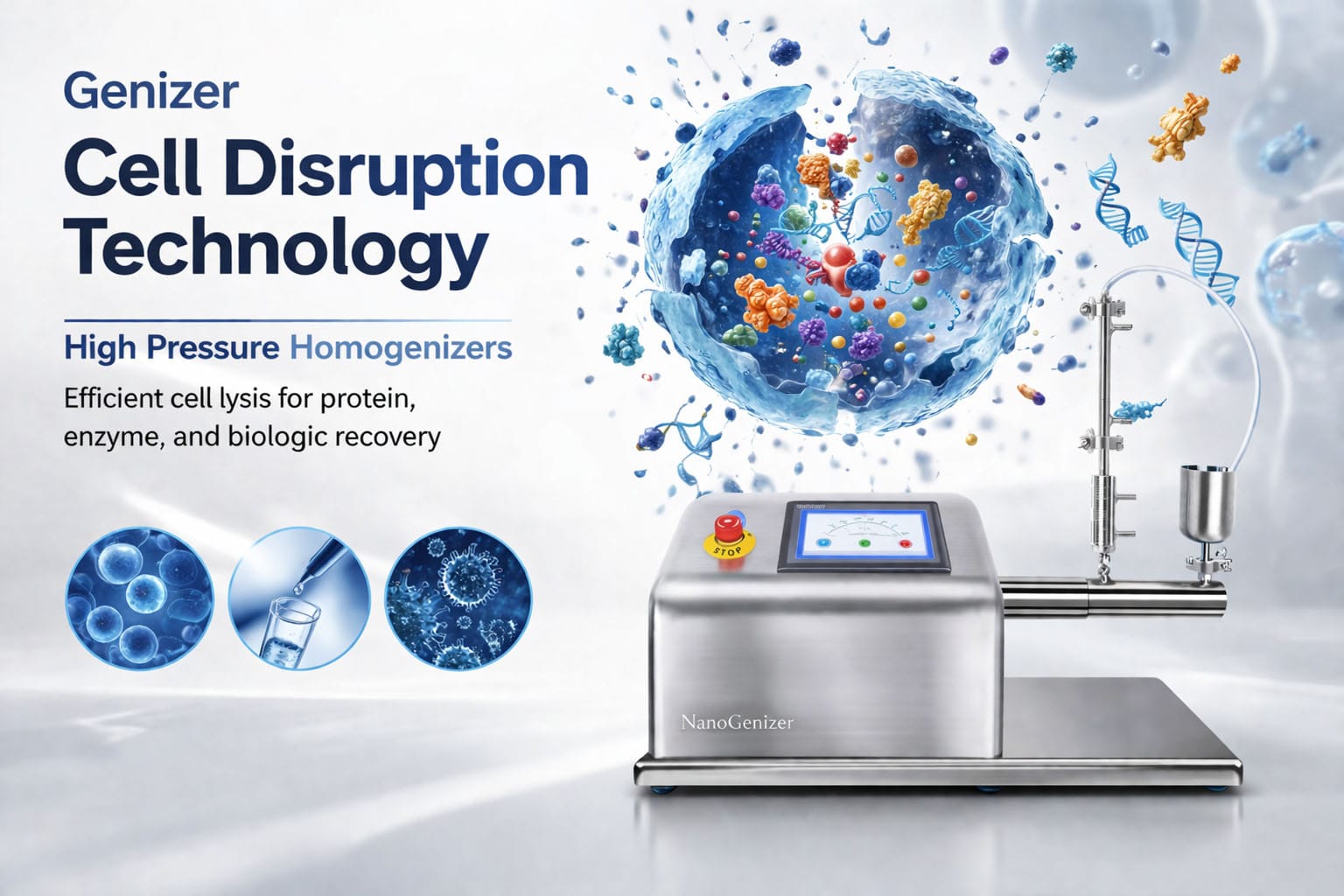
Cell disruption, also known as cell lysis, is a fundamental process in biotechnology used to break open cells and release intracellular components such as proteins, enzymes, nucleic acids, and viruses.
An efficient cell disruption technology ensures:
- High recovery yield of biomolecules
- Preservation of protein and enzyme activity
- Compatibility with downstream purification processes
It is widely applied in:
- Recombinant protein extraction
- Vaccine and biologics production
- mRNA, DNA, and viral vector processing
- Metabolite and nanoparticle recovery
- Life science and biomedical research
Key Challenges in Cell Disruption and Cell Lysis
Despite its importance in modern biotechnology, efficient cell disruption and cell lysis remain technically challenging.
Tough Cell Structures
Bacteria, yeast, algae, and plant cells contain rigid cell walls that are difficult to break.
Heat-Sensitive Biomolecules
Excessive shear force, friction, or poor temperature control may cause protein denaturation and loss of activity.
Inconsistent Lysis Efficiency
Traditional methods often suffer from batch-to-batch variability, leading to low reproducibility.
Scale-Up Limitations
Many laboratory methods fail to translate efficiently into pilot-scale or industrial production.
High Pressure Homogenizer for Cell Disruption
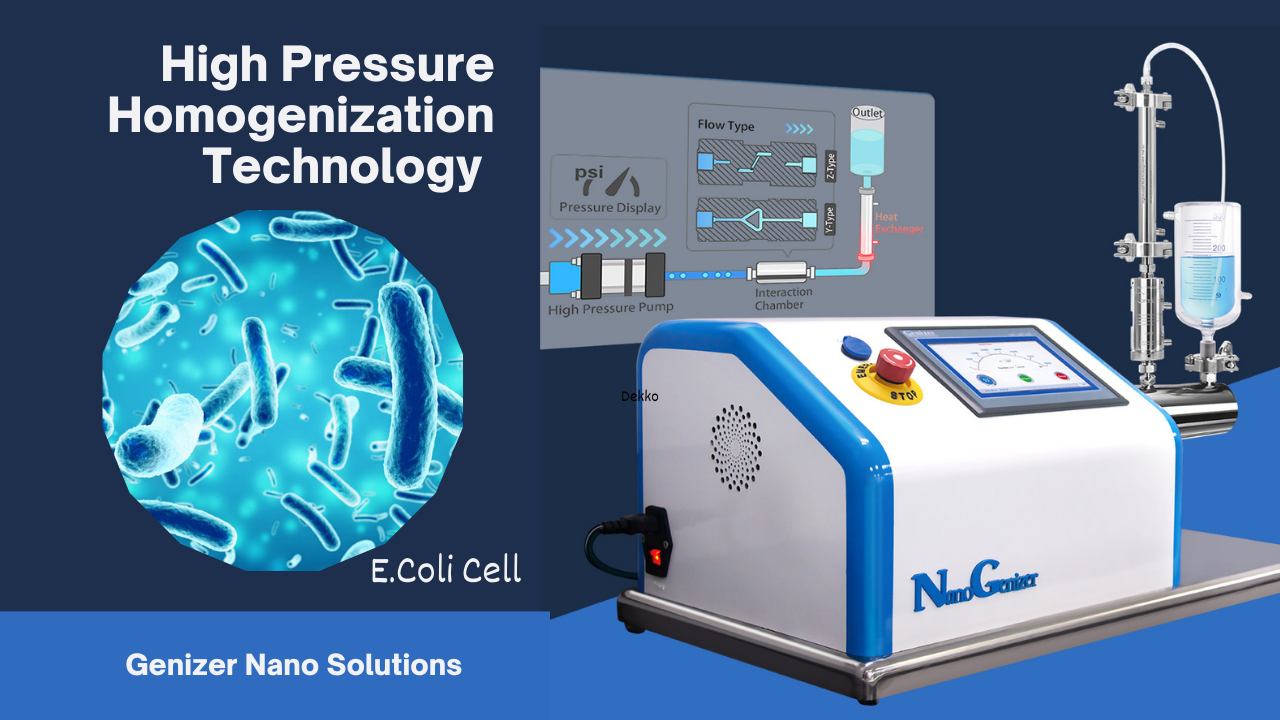
A High Pressure Homogenizer is one of the most efficient and scalable technologies for modern cell disruption and cell lysis applications.
Genizer systems force cell suspensions through a precision-engineered diamond interaction chamber under extremely high pressure. This process generates:
- Intense shear forces
- Turbulence effects
- Cavitation energy
These mechanical forces effectively rupture cell membranes while maintaining intracellular biomolecule integrity.
Advantages of Genizer Cell Disruption Technology
Genizer High Pressure Homogenization technology provides a scalable and controlled solution for cell lysis applications.
Key Benefits:
- High-efficiency and reproducible cell disruption
- Excellent recovery of proteins and intracellular biomolecules
- Gentle processing with minimal thermal damage
- Suitable for a wide range of cell types
- Easy scale-up from lab to industrial production
- Reduced processing time and operational waste
Applications of High Pressure Cell Lysis
Genizer systems are widely used in multiple cell disruption and cell lysis applications, including:
- Mammalian cell lysis (CHO, HeLa)
- Insect cell disruption (Sf9, Sf21)
- Bacterial cell disruption (E. coli)
- Yeast cell lysis
- Microalgae processing
- Fungal spore disruption
NanoGenizer Pressure and Chamber Selection Guide
The efficiency of high pressure cell disruption systems depends on pressure settings and interaction chamber selection.
| Cell Type | Sample Examples | Pressure Range | Interaction Chamber |
|---|---|---|---|
| Mammalian cells | CHO, HeLa | 600–800 bar (8,500–11,500 psi) | H10Z / H10Z-RT |
| Insect cells | Sf9, Sf21 | 600–1,000 bar (8,500–14,500 psi) | H10Z / H10Z-RT |
| Bacteria | E. coli | 800–1,000 bar (11,500–14,500 psi) | H10Z / H10Z-RT |
| Yeast | Yeast strains | 1,200–1,400 bar (17,500–20,000 psi) | H10Z / H10Z-RT |
| Algae | Green algae | 1,200–1,500 bar (up to 21,500 psi) | H10Z / H10Z-RT |
| Spores | Ganoderma | 1,300–1,600 bar (18,500–23,000 psi) | H10Z / H10Z-RT |
RT Chamber Technology for Sensitive Cell Lysis
The RT (Refrigerated Technology) chamber is designed for temperature-sensitive biological samples in cell disruption applications.
Benefits include:
- Continuous low-temperature operation (as low as 4°C)
- Protection of protein and enzyme activity
- Reduced thermal degradation
- Improved product stability and yield
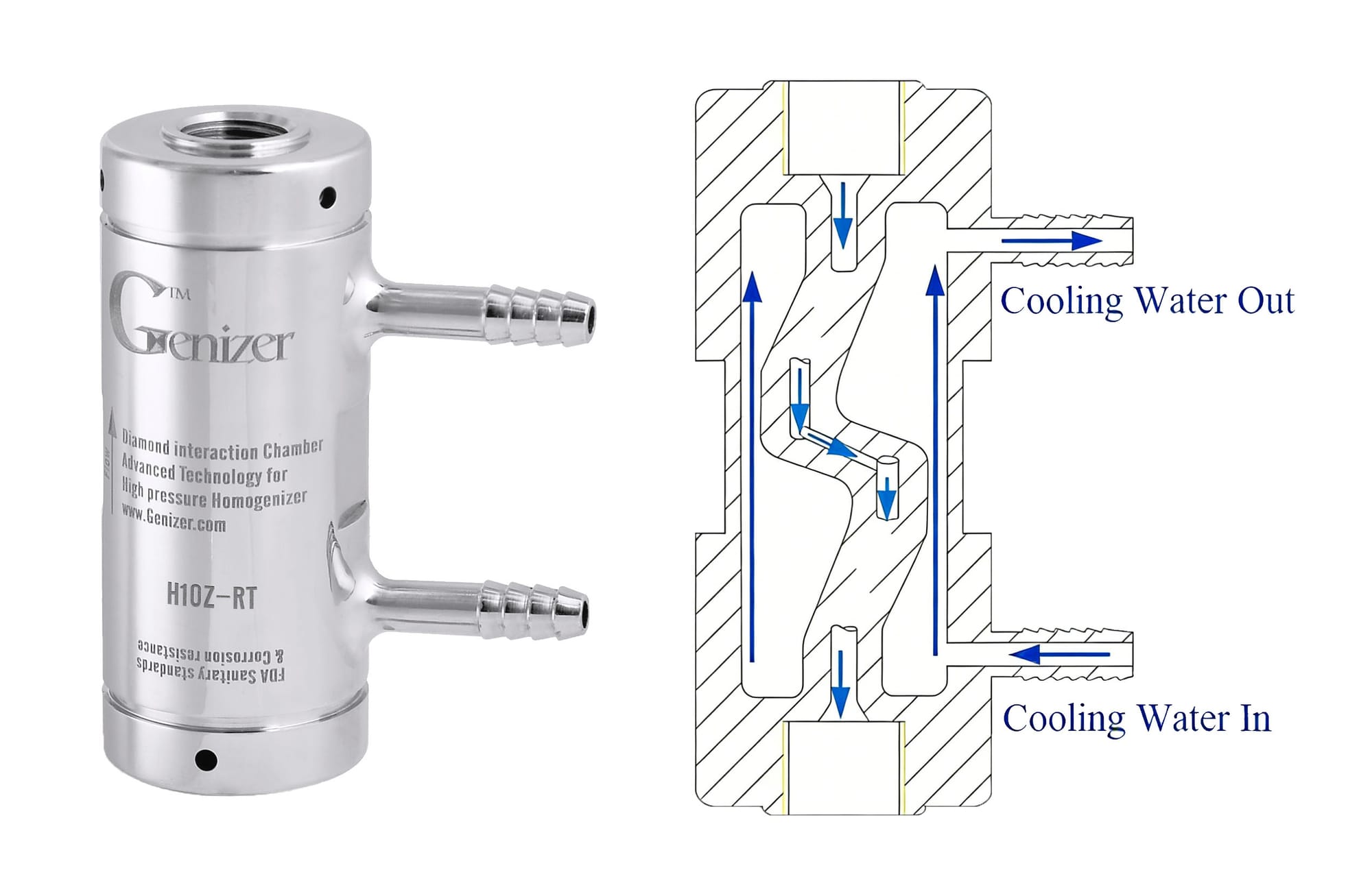
Figure 1. Diamond Interaction Chamber with cooling option
Case Study: E. coli Cell Disruption Using NanoGenizer
Equipment: NanoGenizer 30K High Pressure Homogenizer
Configuration: H30Z-RT + H10Z-RT interaction chamber + heat exchanger
Process Conditions:
- Pressure: 15,000 psi
- Temperature: 4°C (controlled cooling system)
- Cycles: 3–5 passes
Results:
- 3 cycles: >99.99% cell disruption efficiency
- 5 cycles: 100% complete cell lysis
- Protein yield: stable and reproducible
This demonstrates that high pressure homogenization provides highly efficient and scalable bacterial cell disruption performance under controlled conditions.
Genizer High Pressure Homogenizer Product Line
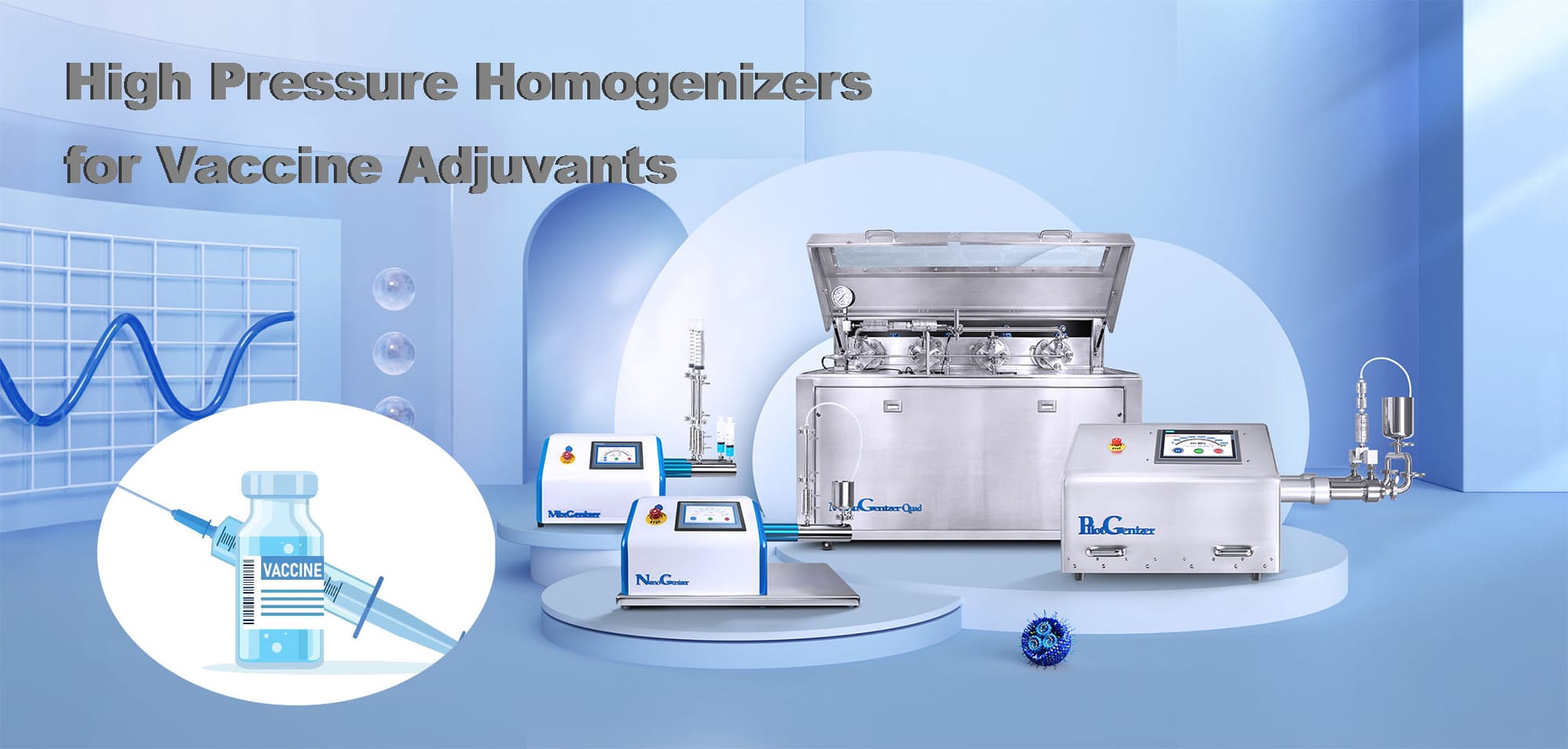
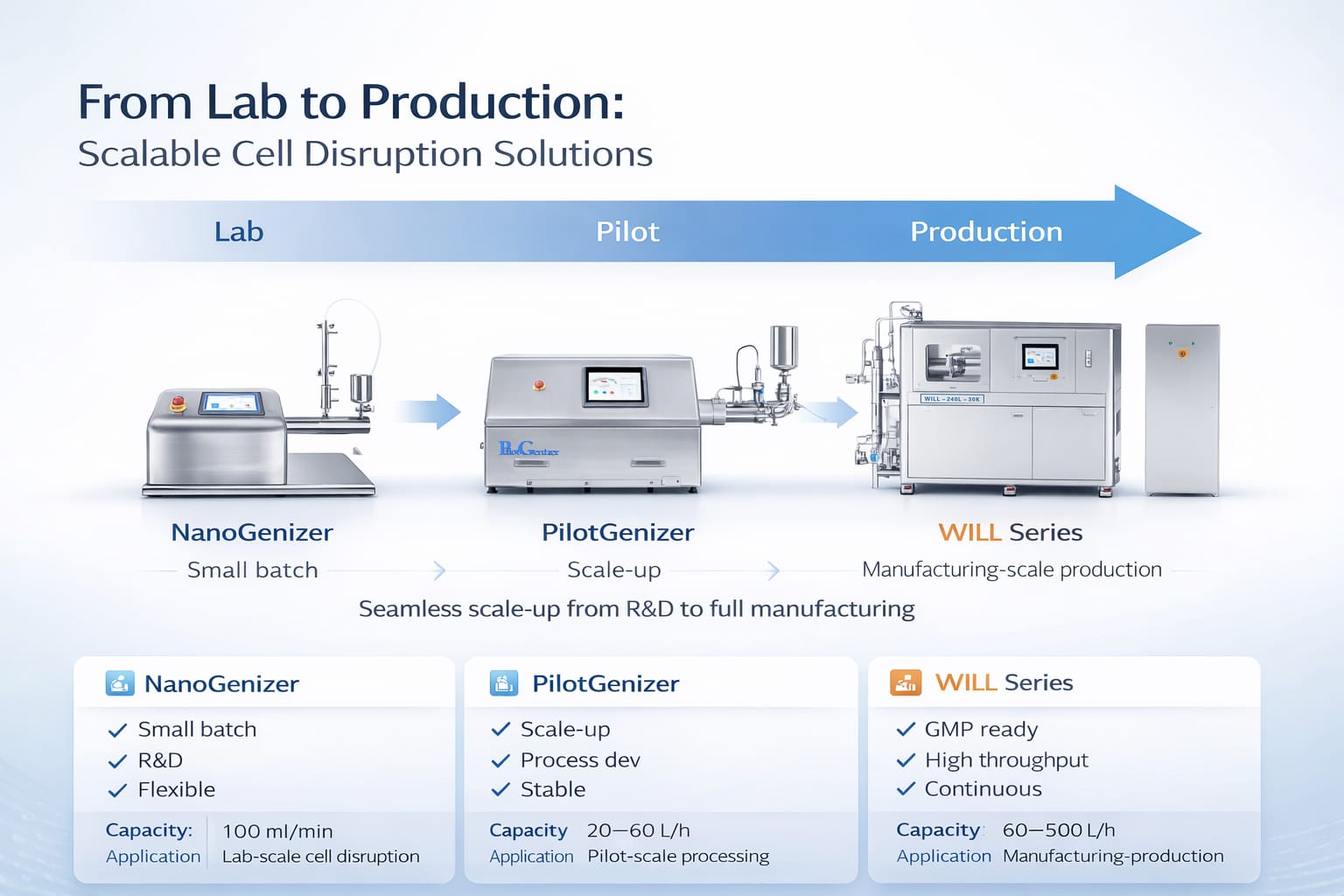
Genizer offers a complete range of cell disruption and cell lysis systems from laboratory to industrial scale.
| Equipment | Capacity | Application |
|---|---|---|
| NanoGenizer | 100 mL/min | Laboratory-scale cell disruption |
| NanoGenizer-Micromix | 100 mL/min | Lab-scale microfluidic processing |
| PilotGenizer | 20–60 L/h | Pilot-scale production |
| WILL Series | 60–500 L/h | Industrial-scale manufacturing |
High Pressure Homogenization for Cell Disruption
High pressure homogenization is a scalable and efficient method for cell disruption and cell lysis in biotechnology.
Genizer High Pressure Homogenizers enable reliable, high-yield cell disruption from laboratory to industrial scale, widely used in biologics, vaccine, and mRNA production.